


- The Indian people are aware of the shortcomings vis-à-vis the healthcare infrastructure in the country that cries perennially for attention in commensurate with the mounting requirements to address this crucial factor. Unfortunately, the inadequacy of our healthcare infrastructure was laid bare so brutally during the years of the pandemic, when scores of innocent lives were lost courtesy of glaring lacunas. Of course, the usual trope about how the country’s burgeoning population has considerably hindered the efforts of successive governments does not cut much ice with the discerning lot anymore. The fact of the matter is, governments, irrespective of party affiliations, have not laid enough emphasis on sprucing up the healthcare infrastructure in the country.

PC: i3L University
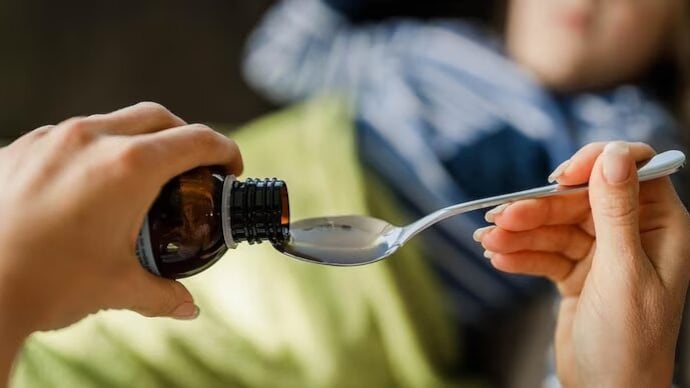
- Most disturbingly, if the inadequacy of healthcare garners all attention, we also must note how our pharmaceutical sector is hogging the limelight for all the wrong reasons. The contamination in medicine has become so rampant, resulting in deaths of innocent lives with alarming regularity. How many more patients must die before India gets serious about diethylene glycol (DEG) contamination in medicines? Mind you, there’s simply no place for toxic substances in a medicine factory. So how do they get inside cough syrup? Governments must answer. For the US, one incident – the world’s first that cost 105 lives in 1937 – was enough. It was a time when medicines were put on the market without toxicity tests.
PC: India Today
- In 1938, the US changed that with its Federal Food, Drug, and Cosmetic Act, and has not had any DEG mass poisoning since. But in India, we are in the middle of one more such mass poisoning. Over a dozen children aged below five years have been confirmed dead from cough syrup-related kidney failure in MP and Rajasthan in the past few days. Dust the files of the past five years, and you find 12 children died of DEG-laced cough syrup in J&K, in 2020. In Aug 2022, Uzbek authorities linked cough syrup made in India to the deaths of 65 children. Four months later, the WHO linked 66 children’s deaths in Gambia to DEG in cough syrup from India. We would think the previous tragedies, altogether 143 deaths, would have shaken the conscience of Indian authorities.

PC: Tamilnadu Test House
- Sadly, we would be so wrong. DEG in medicines has been killing us for decades. There was the Mumbai incident in 1986 that claimed 14 lives. In 1998, some 150 children were referred to Delhi’s Kalawati Saran Children’s Hospital with acute renal failure, and 33 died. The culprit: cough syrup made by a unit in Gurgaon. To save a few rupees, unscrupulous drug makers or their suppliers substitute glycerin in medicinal syrups with lethal DEG, which is an industrial solvent. And that is the crux of the problem with hundreds of human lives sacrificed for a few paise per bottle. The other regrettable part is the indifference of our authorities. DEG deaths are the last thing Indian pharma needs amid global trade tensions. The regulators must step in to address this forthwith




 contamination in medicines that has killed hundreds of children over decades. Despite repeated tragedies from toxic cough syrups—including recent deaths in Madhya Pradesh and Rajasthan and international incidents in Gambia and Uzbekistan—regulatory authorities have failed to prevent unscrupulous manufacturers from substituting glycerin with lethal industrial solvents to cut costs.)