


- At the cost of being labelled/ridiculed as old school thinking, anachronistic, traditionalist, and conservative belief system, there is no substitution for holding a physical book and going about reading the material with great passion/zeal/enthusiasm. People born in the 20th century would vouch in unison, and vociferously, that reading anything by holding it physically in hand has an inexplicable feeling that cannot be simply elaborated. Reflecting nostalgically, we have experienced the fun of holding a paperback and the distinct scent emanating from the same, which would simply kick our senses to browse through with gay abandon. Cometh the 21stcentury, the information technology-driven endeavours have completely altered the old ways of reading.

PC: Popular Science
- The advent of digital media and the thrust placed on digitalization efforts by the global community has resulted in the conventional reading methodology largely paving the way for smartscreens in various hues. The modern-day world has completely embraced digital media, including pedagogy, almost replacing the conventional reading habits of yore. Of course, the present generation has wholeheartedly taken a liking to the digital media available aplenty. However, thankfully, there is still a substantial percentage of people who would wish to stick with the traditional physical reading despite the pulls and pressures of the incredible advances in the digital world. Most encouragingly, many are back to preferring the traditional way of reading as well. That’s good.

PC: The Geeky Leader
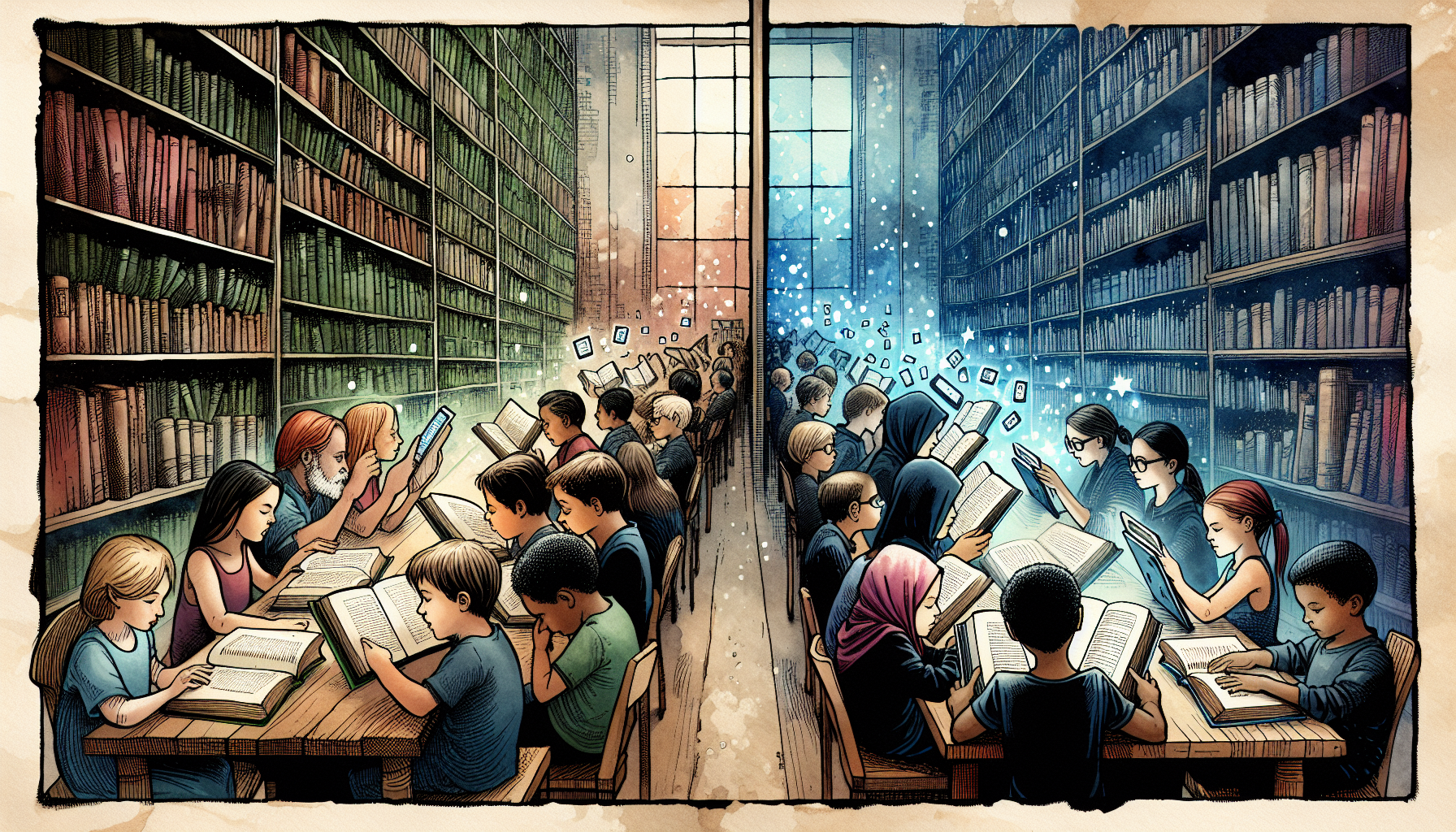
- Notably, for some time now, neuroscientists worldwide have been peering into brains to see how reading from books compares with screen reading, even if we are reading an e-book or e-paper. Researchers’ conclusions are emphatic – reading better and retaining more is best done via the physical device: book, newspaper, periodical, and similar stuff. Not their electronic cousins. Nor audiobooks. Word, as it were. As reported, a Spanish university study analysed 25 studies (2000-2022), with 4.5L participants, to conclude that 10 hours of paper reading results in comprehension, six to eight times greater, than the same read on digital devices, for the same hours. So, what are the differences? Let’s dwelve further to comprehend.
PC: Hoosier Chapter Books
- E-readers don’t engage the brain as much for attention or retention. Paper reading leads to focus, while the mind wanders when reading from screens or listening to audiobooks (multi-tasking is common). Reading on phones makes the brain work harder to process text. It’s a double load – the brain must track progress and make meaning. Paper readers recall structure/sequence better. Then, there’s pace. Reading a physical book or newspaper, we can pause and process at our own pace. With audiobooks, we can’t speed up, skip, slow down, or re-read. The studies found digital natives struggle to make meaning out of their reading – screen readers even overestimated their understanding, found an Israeli study. Let’s make efforts to indulge in physical reading.