
- As the popular saying goes, any event inherently rides on the ubiquitous cause and effect, is stating the obvious. Likewise, such events also usually usher in advantages/disadvantages, merits/demerits, and good/bad, largely depending on how the same is perceived by all concerned. Call it ironic or the way of life, the fact is that somebody’s good may be extremely bad to others. This being the case, not for nothing, it is mentioned that accept life as it comes with equanimity. A similar allegory can be attributed to how the West Asia crisis has panned out over the last couple of months, especially surrounding the disturbances in the critical energy supplies for the global community. The survival instinct compels us to look out for greener pastures perennially.Period.
PC: Free Press Journal
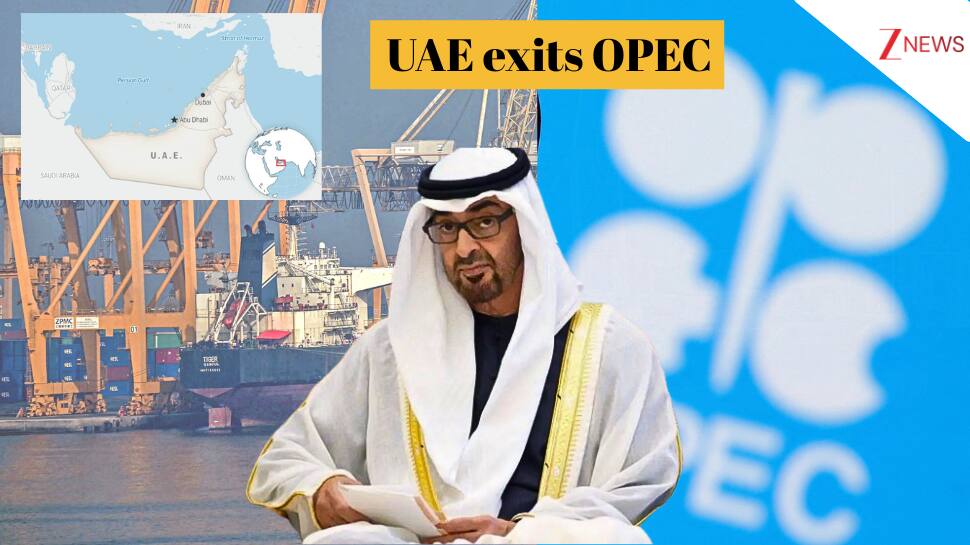
- Modern economies are not immune to these nuanced conjectures since opportunities to survive and excel open hitherto considered insurmountable avenues with consummate ease. In simple terms, look out for opportunities where none exist is the mantra. As such, the recent decision of the UAE to quit OPEC (Organisation of the Petrol Exporting Countries) may not come as a surprise. But it’s a good thing. Note that OPEC is nothing but a cartel, and cartels take a toll on customers. They’re everything free markets ought not to be – a tacit agreement not to compete. Yet, it is a sad truth that they hide in plain sight even in so-called market economies. The EU, which is vocal about free trade, has fined auto component suppliers billions of dollars for collusion.
PC: Zee News – India.Com
- Year after year, it’s found prices of parts ranging from spark plugs to headlights, airbags, and even the foam used in seats, fixed. In Britain – Adam Smith’s home – 50 leading schools, including Eton, Harrow, and Westminster, were found colluding on fee revisions. Even Apple was caught rigging ebook prices in 2013. It got publishers to pull ebooks from Amazon’s Kindle store and sell them at higher rates on its own store. Unlike those cartels, OPEC’s actions have touched everyone everywhere. Because nobody is immune to the prices of diesel, plastic, fertilizer, and textiles. Apparently, OPEC’s actions cost the world $5.7tn between 1970 and 2014. Considering that a 3% loss of GDP typically results in recession, OPEC had inflicted the equivalent of a 2.5-year recession on the world by 2014. Of course, the UAE’s exit isn’t a matter of high principle.
PC: BBC
- It’s leaving OPEC to increase production and revenues, without being hobbled by the group’s quotas. Every oil producer knows that electrification and decarbonization are inevitable. China’s rapid electrification, for example, has already reduced its hydrocarbon demand by 1mn bpd. So, for oil and gas producers, now’s the time to sell as much as they can. UAE’s current production capacity is 4.8mn barrels per day, and it wants to sell 5mn bpd by 2027. But OPEC allows it to sell only 3.4mn bpd. Hence, the break. Makes imminent economic sense, you see. If cracks in one cartel can do that, imagine the good broader decartelization would do. From phone tariffs to plane tickets, house prices to school fees, every rupee saved is greater purchasing power in our hands.