

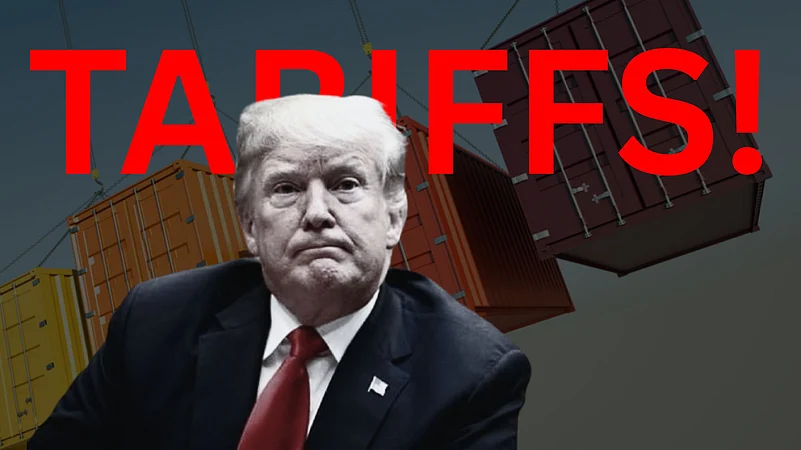
- The global community has accepted the fact that the tariff war introduced by the maverick and extremely unpredictable President of the United States of America will remain in the scheme of things for some time, despite sporadic concessions and pauses. The trade endeavours between friendly countries for mutual benefit will never be the same again, and this is also accepted owing to challenges originating from the tariff war unleashed. The experts are also bandying about these since each nation will embark on protecting its own interests rather than suffer an economic meltdown. Nothing wrong with it, you see. Of course, many experts are also pushing ahead with bilateral trade agreements (FTAs) as a veritable measure to counter the tariff war of Trump.

PC: Finance Saathi
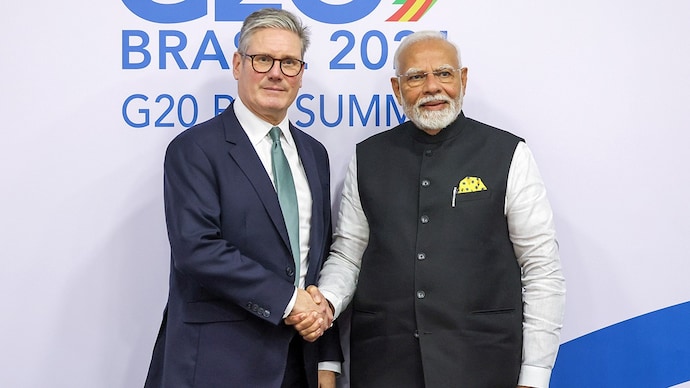
- As you are aware, countries have already moved on with the FTAs as the most logical outcome since multilateral trade agreements appear to be in limbo for the time being. The Indian think tank has initiated several back-channel moves to ensure our trade interests are protected even as the talks with the USA on tariffs are underway. This being the case, the first details of the India-UK FTA are not only welcome news but also show plenty of upside for both countries. The trick was both making key concessions to proceed ahead with the understandingly logical move. Note that after three years of talks, India and the UK have finalized the terms of an FTA. When talks started, India-UK bilateral trade was at $17.5bn, now it’s touched a meatier $57bn.
PC: India Today
- Unsurprisingly, that partly explains why PM Modi called the deal historic on X recently, and the UK Premier Starmer termed it a landmark agreement. Both countries, the fifth and sixth largest economies, needed this deal in the current atmosphere of uncertainty, although the UK arguably needed it more than India. And while it’s tempting to linger on cheaper Scotch and single malt as a result of reduced Indian tariffs, the impact of the FTA will be far-reaching. Take tariffs first. A GOI press release said 99% of Indian exports to the UK will face zero duty. These include labor-intensive products like textiles, leather, footwear, toys, gems, and jewellery, besides white-collar services-IT/ITeS, finance, etc. In return, India will slash tariffs on 90% of British product categories.

PC: carandbike
- Thus, right from British chocolate and cookies to aeroplane parts, Rolls-Royce is a major engine supplier to Boeing, will get cheaper. More significant is India’s decision to let British-made cars in at just 10% duty, albeit with an import quota. Tariff on British whisky and gin has been halved from 150% to 75%. Cheers, there! Welcomingly, the double contribution convention that both sides have agreed on means Indian workers in the UK and vice versa won’t need to make social security contributions for there for the first three years. So, bigger remittances will hopefully flow in. FTAs enmesh economies and align national interests like nothing else. Unquestionably, trade deals can be everyone’s security guarantee. Bilateral FTAs must be pursued diligently.