


- With the developments galore witnessed around the globe on the back of cutting-edge technologies being invented at a breakneck speed, the global community must be welcoming these innovations with great excitement and anticipation. Tell me who does not wish to be part of any revolutionary undertakings that would be remembered for eternity, immensely contributing to furthering the cause of humanity, not only for its novelty but also ushering in an entirely new dimension altogether to be embraced openly? We all desperately wish to be involved in these developments that would go down in the history of humankind as a moment to treasure. Of course, every invention is also inherently endowed with challenges. That’s the catch.
PC: Euronews.com
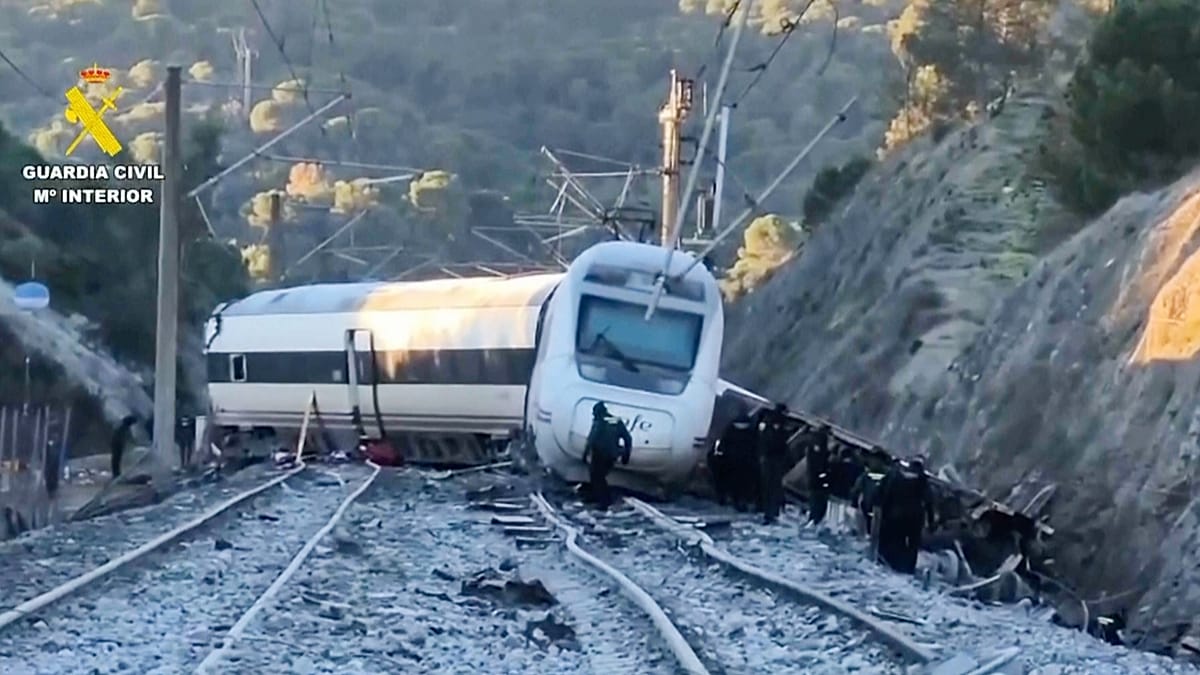
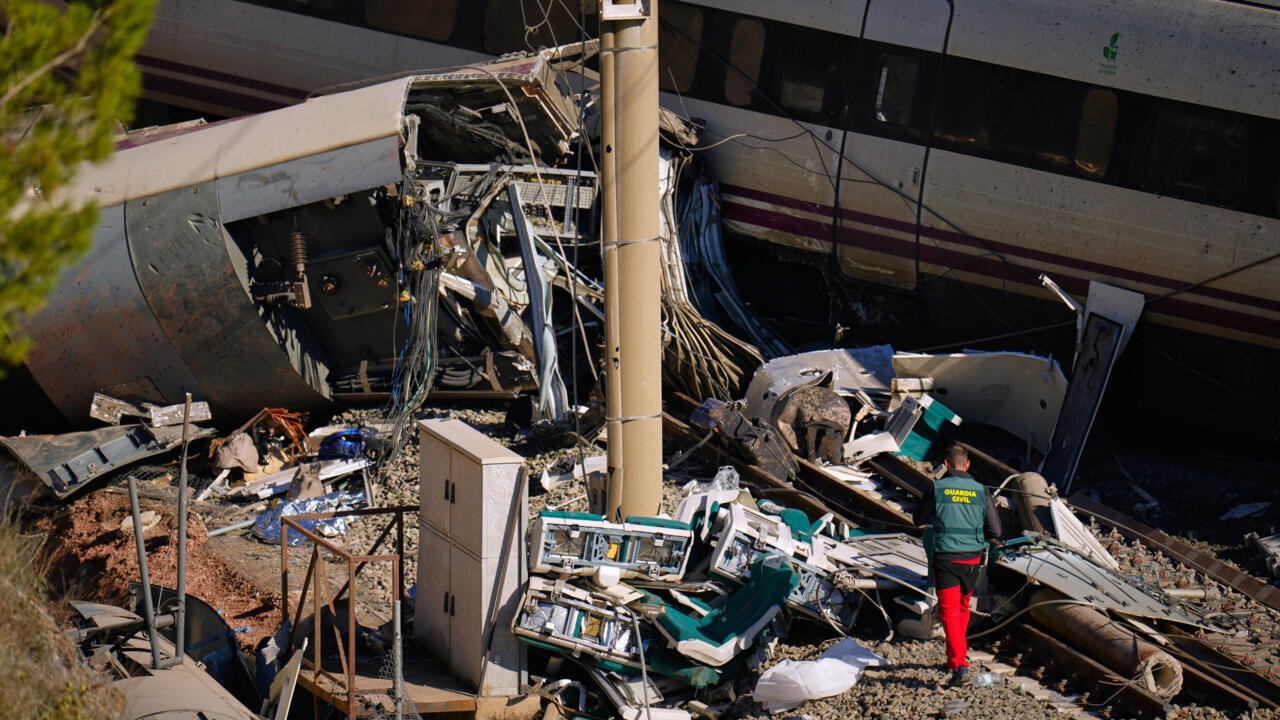
- We are aware of how merits/demerits, good/bad, and advantages/disadvantages form part of any new initiative. This is where the government and the authorities must ensure that none of the loopholes are allowed to be aggravated by ensuring near-foolproof safety on endeavoursinvolving large-scale participation. As such, the recent railway tragedies in a developed country like Spain leave lessons to be learnt for an aspirational society like India, whose ambitious high-speed train dreams are taking nascent steps. As reported recently, two accidents in Spain in a span of a few days – the first one the worst in Spanish records since 2013 – place the spotlight on railway safety. Why should these tragedies be considered as lessons for India? Let’s dwelve.
PC: France 24
- In the first crash in southern Spain, the tail end of a train carrying 289 passengers derailed and crashed into an oncoming train, resulting in 43 fatalities. In the second accident, a Barcelona commuter train crashed after it hit a retaining wall that had fallen onto the tracks, leading to the death of a trainee driver and injuring 37. This, even as Spain’s railway network is considered one of the safest in Europe. According to EU statistics, in 2024, a total of 16 passengers died in accidents on Europe’s railway networks, with only one fatality in Spain. Yet, in August last year, the Spanish Union of Railway Drivers had asked Spain’s rail operator to investigate flaws on high-speed train lines due to increased traffic – Spanish authorities should have taken heed. Note that Spain has the longest high-speed rail network in Europe.

PC: NDTV
- In India, which is yet to start its maiden high-speed train, rail safety remains a persistent issue. Per GOI, rail safety in India has dramatically improved, with consequential train accidents reducing from 135 in 2014-15 to 31 in 2024-25. But recall that the horrific 2023 Balasore train accident killed 296 people. Thus, despite investment in track modernization, Indian Railways completed track renewal over 6851 km in the 2024-25 fiscal year; there’s much room for improvement. Worryingly, operationalization of the automatic train protection system Kavach has missed several deadlines on the high-density Delhi-Mumbai and Delhi-Howrah routes. The first Mumbai-Ahmedabad high-speed train will have a speed of more than 300 kmph, set to be operationalized in Aug 2027. We must prepare a near-foolproof safety system for high-speed trains.