
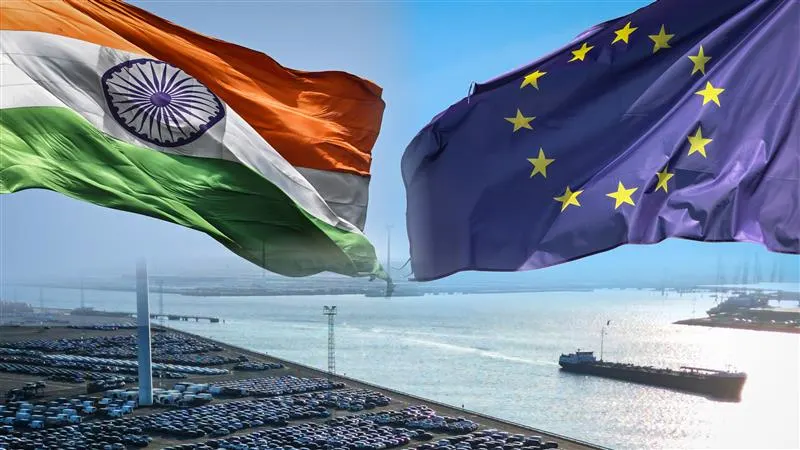
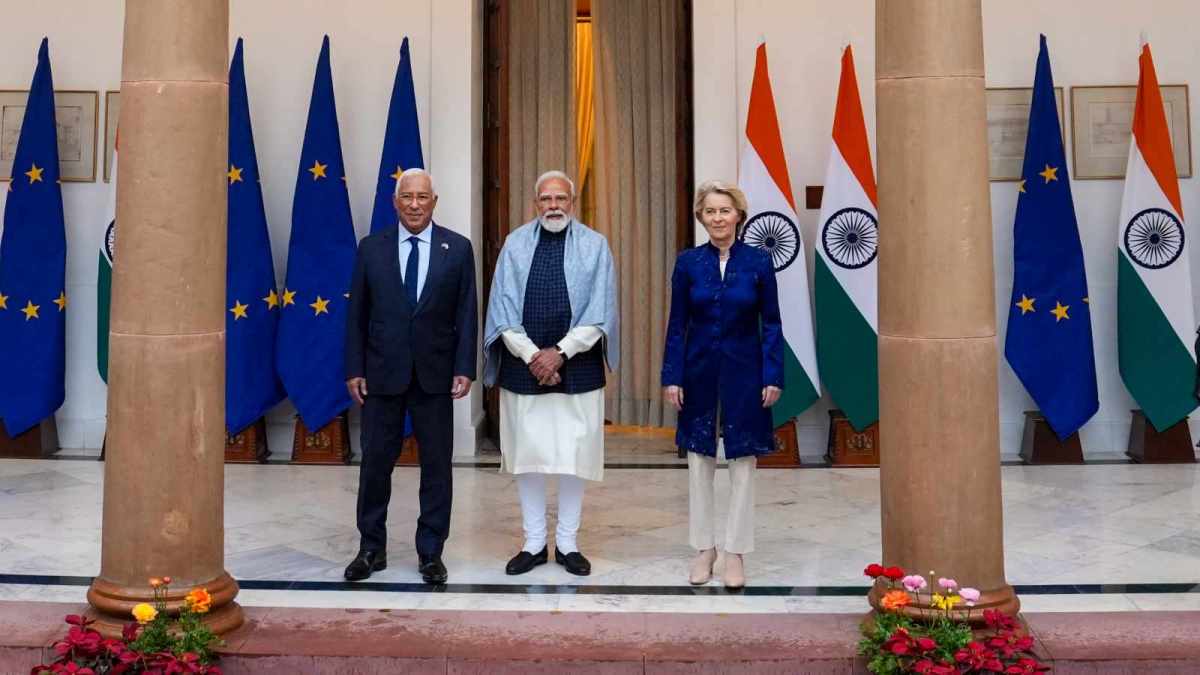
- One of the significant news headlines around the world must be the sealing of the free trade agreement between India and the European Union, which was in limbo for almost 18 years. The announcement, made during India’s 77th Republic Day, added a nice ring to the deal. Also, the implications of Donald Trump’s extremely disruptive tariff war, with India being at the receiving end of 25%/50% tariffs imposed on sourcing Russian crude oil, must have influenced the process of speeding up the two entities’ cooperation. The sealing of the deal has fructified at the most opportune time since the geopolitical and geostrategic scenario is anything but peaceful/harmonious of late.

PC: The Economic Times
- While both India and the EU rejoice at the momentous occasion, with the agreement being dubbed as Mother Of All Deals (MOAD), what should be the next logical course of action is to ensure the same is implemented within a set timeframe. A few days after the FTA, how far are we from cheaper European wine, chocolate, and cars? Conservatively speaking, at least a year, but the wait could get longer. That’s because this MOAD will be implemented only after it’s greenlit by the European Council and the European Parliament. Which is easier said than done. Consider what happened with the EU’s other recent FTA with South America’s Mercosur bloc. Signed on Jan 17, it ended in limbo just four days later, when the European Parliament sought legal opinion.
PC: The Indian Express
- As we understand, the process can take up to two years. Since MOAD is a comprehensive agreement, covering not only goods and services but also the movement of workers, it might encounter resistance in some countries. It’s a fact that Europe’s mood on immigrants has soured over the past decade, and while illegal Indian emigrants mostly aim for the US, there’s a steady flow into the EU too. This is a point of action for GOI. By committing to stop illegal emigration, it can make a strong case for the inflow of authorized workers that Europe needs in large numbers. As European Central Bank President Christine Lagarde said, without foreign workers, Germany’s GDP would have been 7% less than its 2019 level.
PC: OpIndia
- As reported, a McKinsey report also estimates that the inclusion of ethnocultural minority employees in the workforce can give a $120bn boost to the EU’s economy. Job vacancy rates have grown by 70% across the EU since 2020, and 75% of employers can’t find workers with the right skills. There are acute shortages of both white-and-blue-collar workers, from heavy truck drivers to doctors, mechanics to nurses, and software developers. India should aim to become the biggest exporter of skilled manpower to fill these gaps. Dedicated ministries and the Centre, in the states, could keep track of high-demand skills, arrange training programmes, and oversee the outflow of workers from India. Homework should start now, before the FTA deal fructifies in substance.