


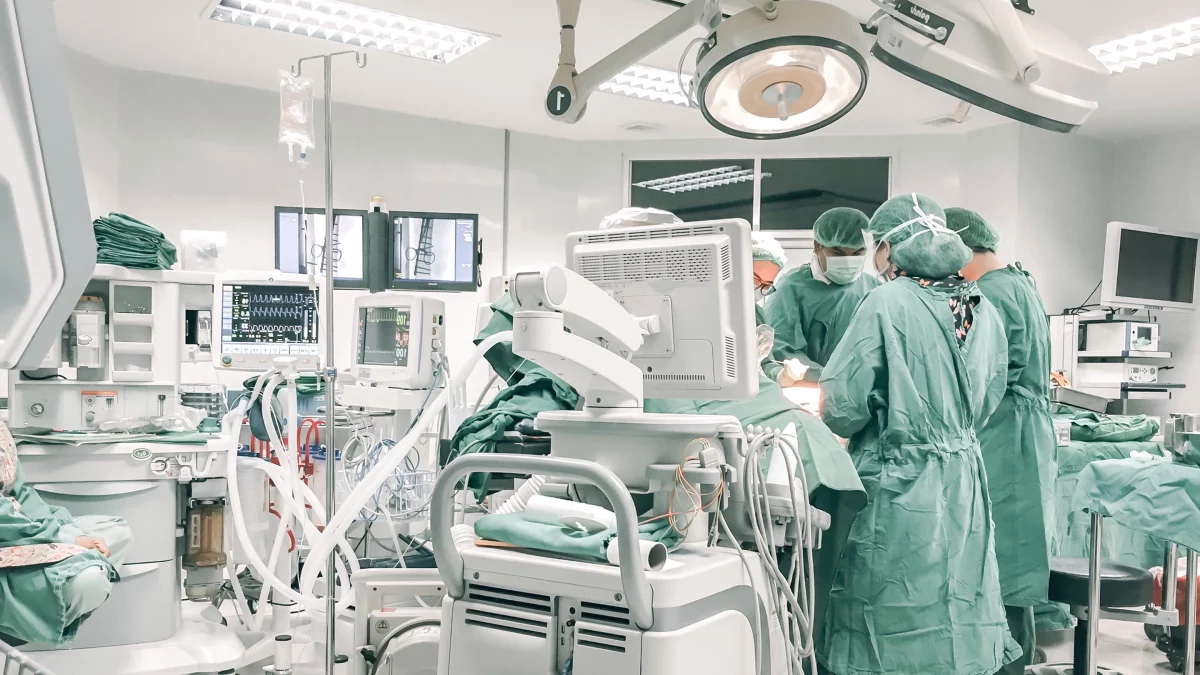
- The global community woke up to the debilitating effects of the COVID-19 pandemic when the modern world was forced to go on its knees courtesy of the inadequacy of the healthcare infrastructure bogging us down. More so for a country like India, where the glaring anomaly stands starkly exposed, as the healthcare infrastructure here is chaotic and inadequate even at the best of times. Thousands of innocent lives and livelihoods were lost when the years of paying scant attention to the most critical aspect of human development index spectacularly failed to offer solace to the public. The harsh lessons learnt during those times will take time to provide succour. Nonetheless, the overall development in the healthcare sector requires further examination.
PC: Boston Consulting Group
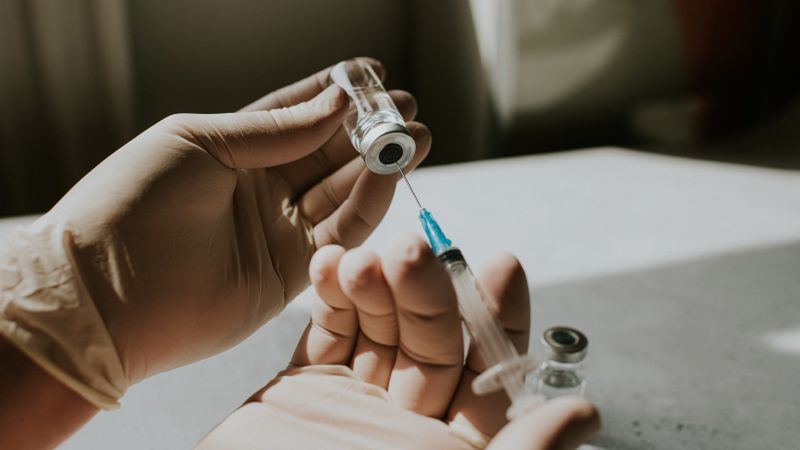
- The glaring disparity between the public and private healthcare facilities here needs no further elaboration. Unaffordability of healthcare for critical diseases/illnesses is quite rampant, especially for some of the life-threatening ones, including vaccines, which are prohibitively expensive to manage for those dependent on public facilities. Thus, looking at how a new HIV vaccine would help those suffering from the same would reveal the prohibitively expensive treatment regime, mostly unaffordable to even the high-heeled public. As reported recently, a pill to treat multidrug-resistant HIV, lenacapavir, has been approved by the US drug regulator FDA, as a preventive vaccine. A welcome invention that should help humanity to keep the dreaded disease at bay.
PC: Yale Medicine
- Make no mistake, this is a huge deal – incidence of HIV may have declined since the 1990s, but even today, about 13L people globally are infected by the virus every year. But its price is an obstacle. Sold for $28,218 per year in the US, it’s prohibitive even for high-income nations. Pharma company Gilead, which manufactures lenacapavir, has reportedly tied up with over 100 middle and low-income countries for the manufacture of generics pending approvals. As it presently stands, access likely will still be tricky for poorer African countries that bear the HIV burden. Drugs to prevent HIV transmission have been around for almost a decade, but a daily dosage regimen makes these extremely unreliable. How does India fare, though?
PC: CNN
Also, people forget, and there’s the stigma/doubt in partners that a daily dose is preventive. Lenacapavir needs to be taken just twice a year. Its long-lasting effect in preventing infection, almost 100% in adults and adolescents, is thus the best bet today. Further, because HIV research in the US bears the additional burden of the Trump administration’s slashed funds. Note that an effective vaccine for HIV has been elusive for decades because of its rapid mutations. Several mRNA vaccines are in clinical trials. The stoppage of funding has affected hundreds of such HIV vaccine-related research. The Union Health Ministry should make all out effort to ensure this vaccine is made available in a generic form and at an affordable rate. This is imperative.