

- The very mention of India’s rich heritage conjures up the image of timeless but fascinating culture, unique traditions, unbreachable belief systems, and relevant practices that have shaped our destiny since time immemorial. Needless to mention, the ancient Indian civilization has made immense contributions to furthering the cause of humankind in numerous ways over the millennia. Most remarkably, those timeless contributions remain relevant even now, as the entire universe witnesses some of the most cutting-edge advancements in information technology. Yes, Indian history is replete with conquistadors/plunderers/invaders who simply ravaged/savaged the glorious land for centuries. But we have always reinvented ourselves.

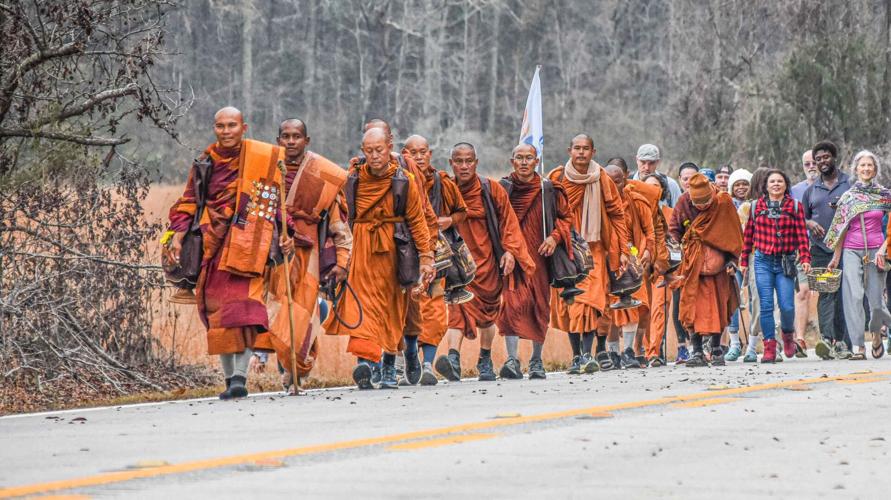
PC: Mississippi Today
- Thankfully, the core of the ancient Indian civilization has remained intact even though concerted efforts were made to erode it. Of course, peace has been at the centre of all our philosophies/spiritual discourses that have been unique, revolutionary, and thought-provoking even in the present times when conflicts of various hues are the order of the day. The moot point to ponder over here is whether we have completely neglected peace as a definite mode to ensure harmonious existence for the betterment and welfare of society at large. Going by the look of things, a walk for peace in America using conceptual tools that originated in our land, making us believe we are neglecting this time-tested mechanism.

PC: KRCG
- In the din and clatter that engulfs Americans today, many of them are reporting an unusual moment of stillness. This is happening courtesy of a 3700 km pilgrimage, taking a group of Buddhist monks from their Vipassana centre in Texas to Washington DC. Their walk will take around 110 days. They pause at town halls, city centres, churches, parks, and parking lots along the way. And everywhere they pause, people slow down. This is a walk for peace. But peace as mindfulness, rather than some external destination. Interestingly, the monks are accompanied by ‘peace dog’ Aloka. They first met him on an Indian street. He’s kept them company ever since, and they joke that he’s an American citizen now.
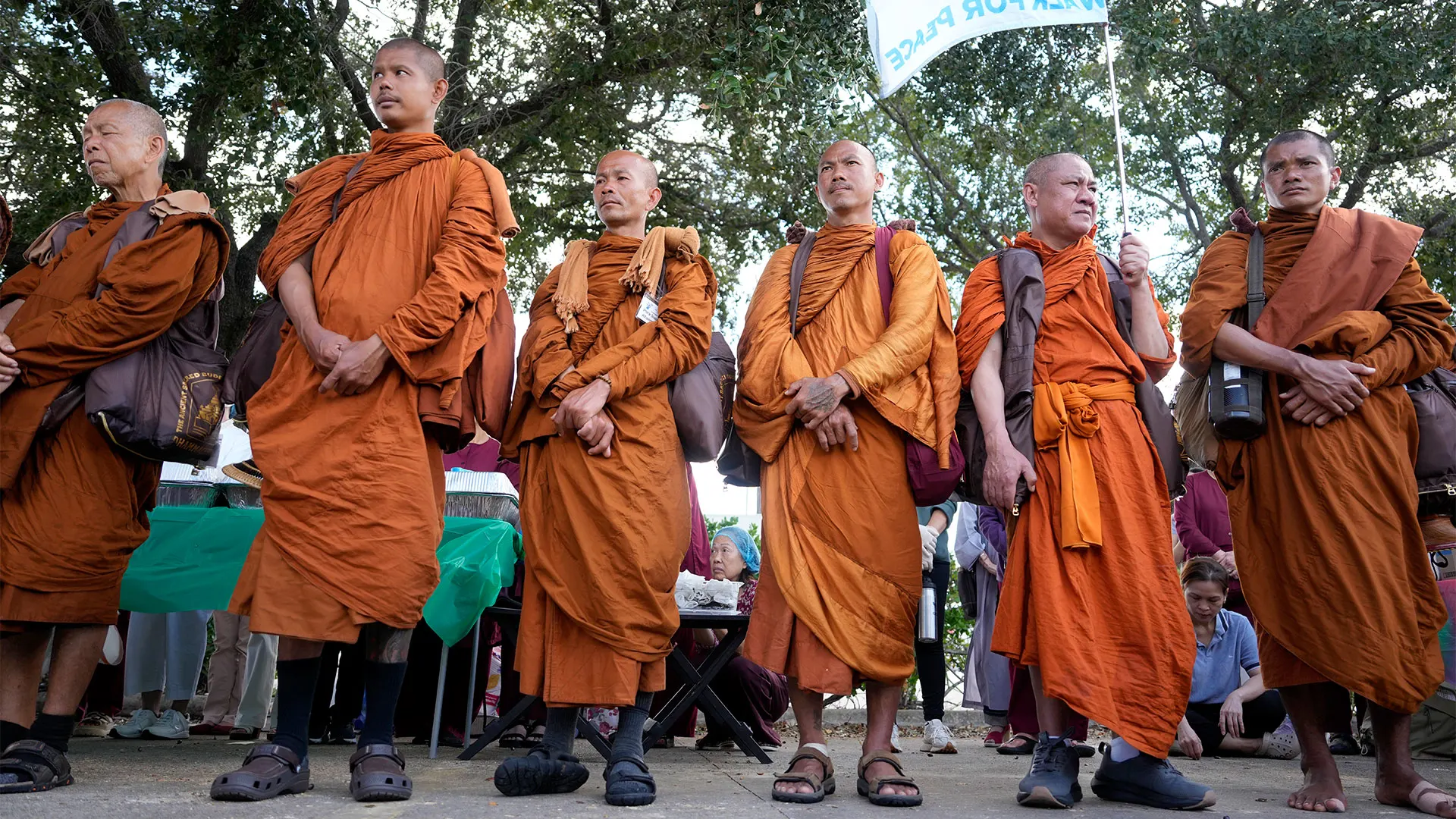
- Maybe the oddest thing about the way the monks and Aloka have captured the imagination is that all this has happened without drama, without noise. People do pour out emotion, but the monks don’t amplify it. For those watching this pilgrimage from India, it’s a bittersweet feeling. It is in our land that the Buddha attained enlightenment 2500 years ago. Ancient India was also animated by a strong belief that animals have a soul as much as humans. This idea reached the West only with modernity. Ashoka’s rock and pillar edicts promoted self-control, compassion towards animals, respect for all religions, and non-violence. Worryingly, these conceptual tools are still in our cultural DNA but weakened by a lack of practice. Can we not resurrect it? We must.