


- As can be deduced from the several ongoing conflicts afflicting the global community, courtesy of various interests driving the divisive forces to look for largely debilitating and destructively unidimensional one-upmanship, the global community is faced with an increasingly suffocating environment choking economies of every country. The Middle East/West Asia conflict brought about by the US-Israel-Iran war, also involving the neighbouring countries, has succeeded in singeing the whole world since the crucial energy supplies pass through these choppy waters across the globe. Iran’s holding firm on not allowing seamless passage through the Strait of Hormuz has turned energy supplies around the world upside down.
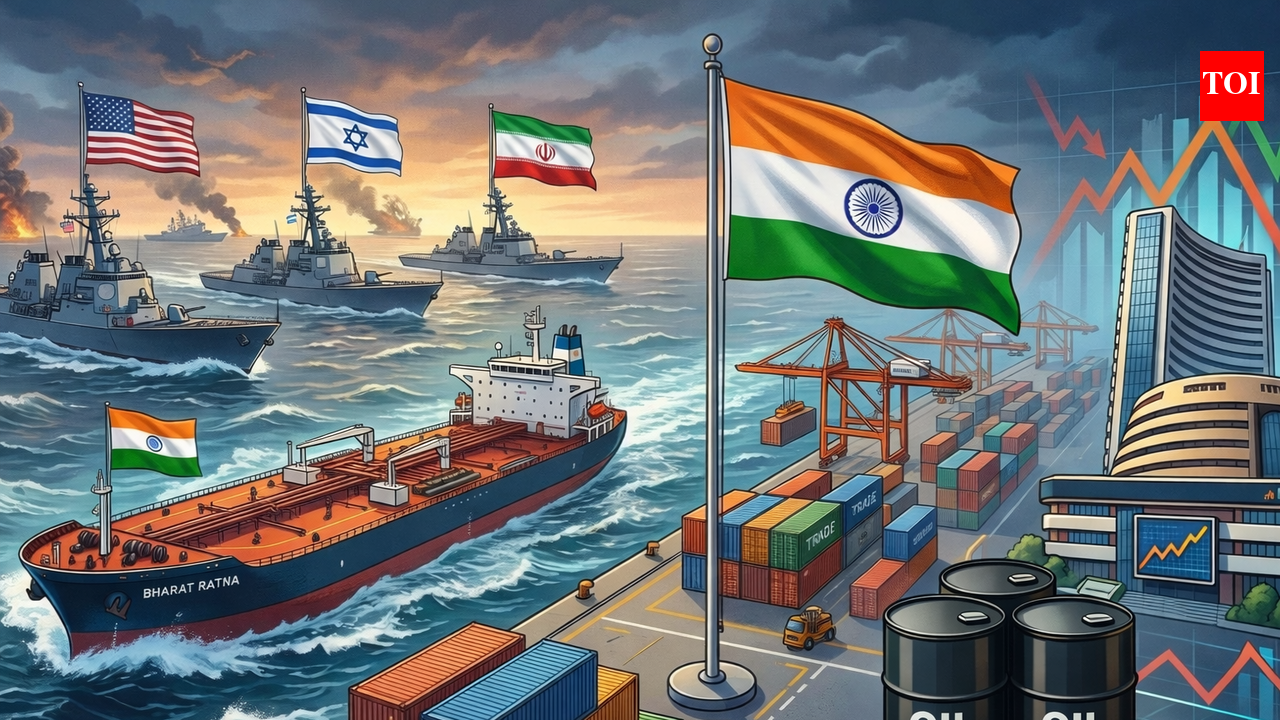
PC: The Times of India
- As is the case with any other country, India too has been placed under severe strain because of our over-reliance on energy imports from the Gulf countries. Thankfully, some prudent and pragmatic measures initiated by the Union Government at the start of the West Asia crisis ensured that the country was shielded from the repercussions of the war with respect to energy supplies. To what extent the GDP growth will be affected by the ongoing crisis will be known in the next few months. Nonetheless, what can be observed is that India is not breaking at the seams in attempting to stay afloat from the widely expanding and deepening crisis. That’s some comfort. The moot point to ponder over here is how we could utilize the vast coal resources to tide us over the energy crisis as a buffering measure.

PC: Free Press Journal
- Let’s delve further to comprehend the scenario. The smart use of coal can shield India from foreign crises. How, though? Take, for instance, when Trump’s blockade left Cuba without oil last month, 56-year-old Juan Carlos Pino modified his 1980 Fiat Polski to run on charcoal. Of course, he didn’t strap on a steam engine. Rather, the eighth-pass mechanic added a homemade gasifier – a closed tank for heating charcoal chips, to make combustible gas – at the back. Now imagine what an army of PhDs might do with wood chips or coal. You can look at China, which is sitting pretty amid a global crisis of oil, gas, and urea. Only because it taught itself to make urea, methanol, and basic chemicals like ethylene and propylene needed to make plastics and textiles. From where?

PC: ScanX
- From coal rather than petroleum. China, like India, has many hundreds of billion tonnes of coal. And it makes 78% of its urea from coal, not gas. So, this year, farmers aren’t worried about higher fertilizer prices. They aren’t reducing corn acreage, while US farmers are. Further, their chicken feed and ethanol prices won’t rise. Speaking of ethanol, India’s E20 programme will also feel the impact of higher urea prices. Whereas China, the world’s biggest producer of methanol – mostly derived from coal – will have no problem supplying M15 or even M85 fuel for cars. With the world’s fourth-largest deposits, India should also use its coal smartly. It has an old plan to gasify 100mn tonne-per-annum coal-based urea plant at Talcher, Odisha. This should be prioritized.