

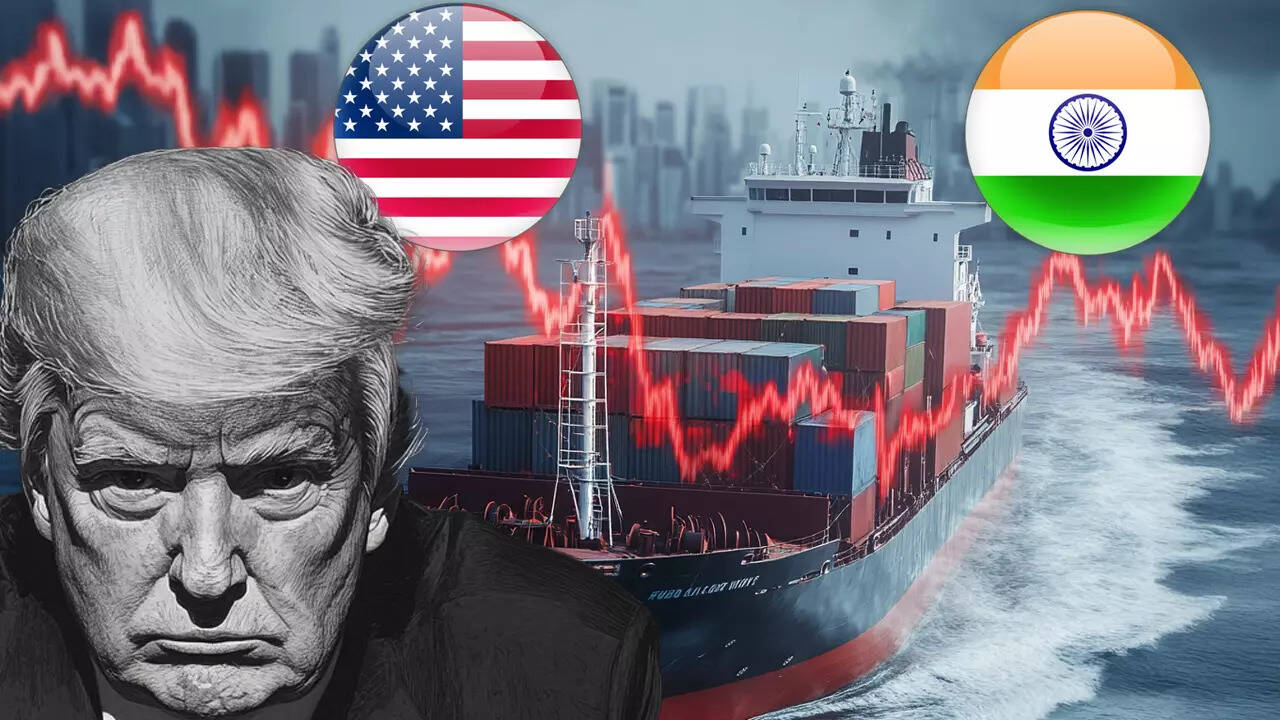
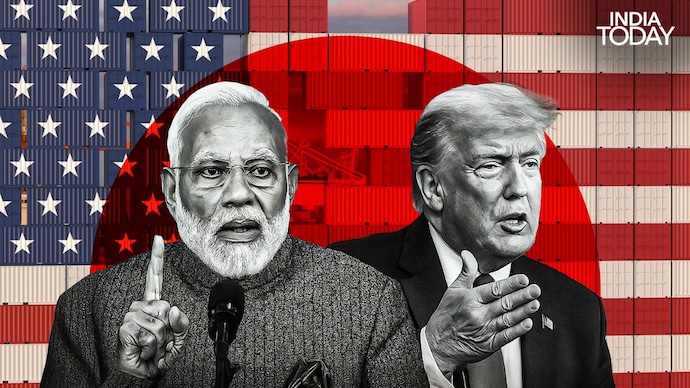
- Donald Trump’s petulance-ridden agenda against India has resulted in an additional 25% tariff as sanctions on top of a 25% announced earlier on Indian products exported to the USA. While the Indian leadership, led by the Prime Minister, didn’t yield to pressure from the US authorities, the tariff kicking in will have an impact on the economy and, in turn, on the country’s GDP as well. To what extent those impacts would unfold needs to be watched in the coming days. Going by the positioning of the Indian think tank, it is evident that the modalities of buffering the tariff impact to the bare minimum possible are underway. However, millions of labourers being affected by the tariff is a fact that cannot be brushed under the carpet.
PC: India Today
- Some of the sectors that would be hard hit will be textiles, gems & jewellery, auto parts, machinery and mechanical appliances, metals, organic chemicals, agriculture and processed foods, leather and footwear, handicrafts, furniture, and seafood. Moreover, history will remember Trump’s tariff as a case of irresistible force meeting immovable object. While he couldn’t weaken India’s resolve, Trump may have forced a strategic rethink here, and a larger pragmatic realignment in the East. Yes, the picture will be clearer after Modi visits Japan and China, the fourth and second largest economies, respectively. What is clear is that India needs to act fast to save its textile, shrimp, and other export-oriented industries that employ millions.

PC: KNN India
- Further, relative to India’s $4tn GDP, the loss of roughly $40bn worth of exports on account of punishing tariffs might seem insignificant. But this misreads the situation. The sectors hurt most by US tariffs are all labour-intensive. For instance, 3mn jobs could be lost in Tamil Nadu’s textile industry alone. TN accounts for 28% of India’s textile exports and employs 7.5mn workers in just this sector. Early this year, PM had spoken about trebling India’s textile export earnings from Rs.3L cr to Rs. 9L cr, with a corresponding increase in jobs. Now, the plan is in jeopardy, and existing units face a crisis. Other big employers like gems and jewellery, chemicals, and seafood sectors are also in for a rough ride.
PC: iPleaders
- While states and the Centre have promised support to these industries, including finding new markets for them, that will take time. After all, unlike fighter planes, shirts and shrimp aren’t sold at the govt-to-govt level. Orders from new clients could take weeks or even months, and the challenge is to ensure these export-oriented factories continue running in the interim without benching or sacking staff. Considering import substitution by downstream industries and citizens should work. PM is urging all to buy Indian, and domestic demand can certainly keep the lights on in the export hubs. Prioritising domestic sourcing over super profits should be the mantra for businesses. We, the consumers, should also value local products. Let’s fight it out in this tariff war.




, which threatens millions of jobs in labor-intensive sectors like textiles, gems and jewelry, chemicals, and seafood, with Tamil Nadu's textile industry alone facing potential loss of 3 million jobs. In response, India is pursuing import substitution strategies and promoting domestic consumption through the "buy Indian" campaign while Prime Minister Modi considers strategic realignments with major economies like Japan and China.)