

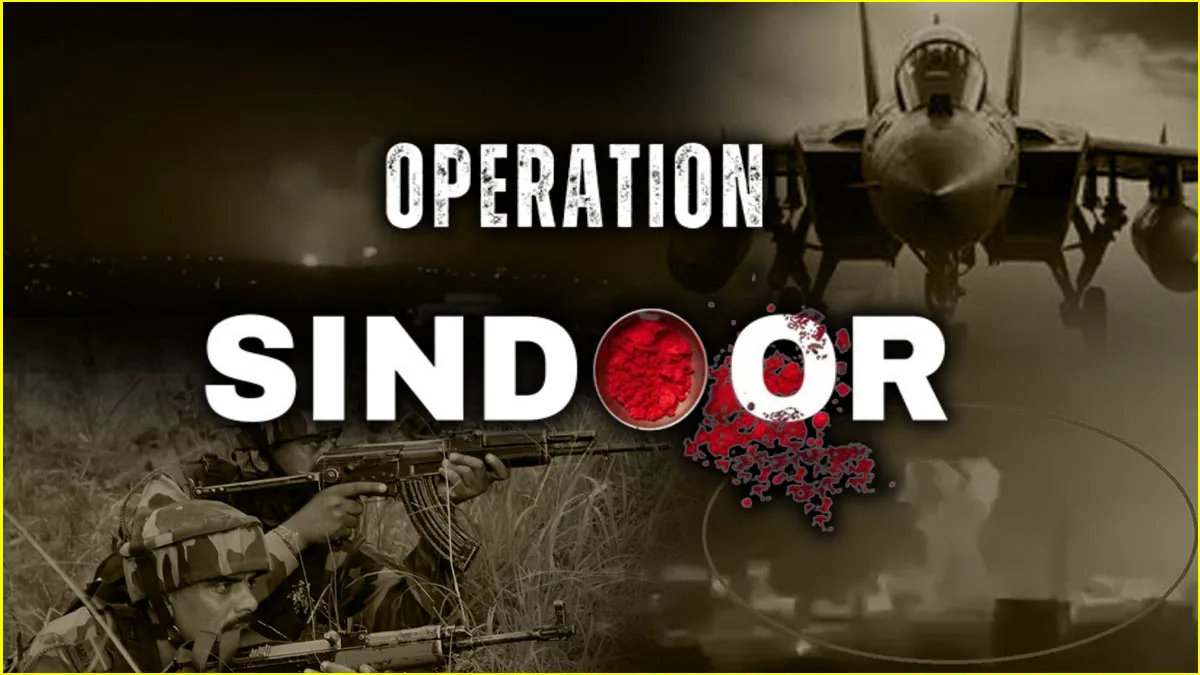
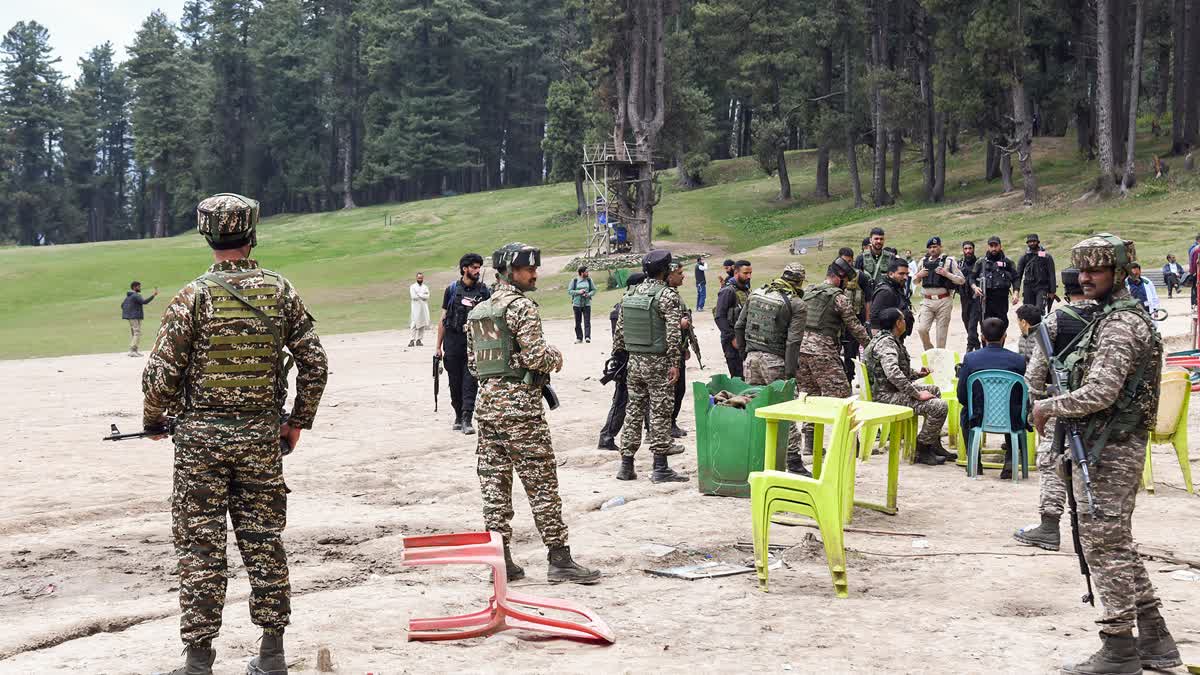
- The Pahalgam attack, resulting in the killings of 26 innocent tourists, evoked widespread condemnation for the dastardly and cold-hearted execution perpetrated by the deep state actors from Pakistan’s terror factory. The Union Government, led by Prime Minister Narendra Modi, had to react appropriately since the majority sentiment in the country was to ensure that the terrorist backers are not only taught a great lesson for inflicting such grief on the victims’ families, but also to dissuade the perpetrators by setting an effective precedent. Thus, Operation Sindoor was launched by the Indian armed forces with such precision, calibrated, and targeted execution that the results were an extraordinarily successful outcome, inflicting palpable damage to the enemy.
PC: ETV Bharat
- What was more spectacular was the way the Indian Air Defence Systems proved to be impregnable despite the Pakistani army’s concerted efforts at shooting swarms of waves and other projectiles at us. That the Indian AD Systems swatted all that were aimed at the Indian side along the borders proved beyond doubt how well equipped and prepared our forces were. Not only that, what must have sent the shivers down the Pakistani establishment’s spine was the way Indian military succeeded in not only breaching their AD Systems but also showcasing the ability to hit deep inside their territories, including some of the most critical airbases with impunity. This had never happened in the last fifty years and eventually forced the enemy to seek a ceasefire.

PC: Free Press Journal
- The moot point to ponder over here is why did Indian think tank acceded to the desperate request for a ceasefire from the battered Pakistani establishment running for cover from the damages caused by the Indian precision attacks. To begin with, the Indian response in the form of Operation Sindoor was most effective in conveying to the enemy that no terrorist hideouts/locations/training facilities/inimical infrastructure is out of reach of our forces. The icing on the cake must be the way our military forces struck deep inside Pakistani airbases, seamlessly bypassing the enemy air defence systems with such nonchalance. Of course, the airstrikes nearer to some of the critical nuclear housing infrastructure must have made the Pakistan army reassess the situation.

PC: The Kashmir Monitor
- Hence, the desperate call for the ceasefire was duly accepted by the Indian side. Undeniably, pressure from some of the most important countries, too, would have played a role in the decision. However, most importantly, Indian leadership’s stern action and execution that no target is off limits for the capabilities of our armed forces must have provided the leadership with a sense of achieving intended objectives. As the PM mentioned during his national address, this is not an era of war, but he also mentioned in the same vein that the era is not for fostering terrorism either. The opposition and a few defence experts may disagree with the Indian decision for a ceasefire, albeit a pause with the Operation Sindoor still on, as clarified by the Union Government. Thus, the decision to agree to a ceasefire is the right one.