


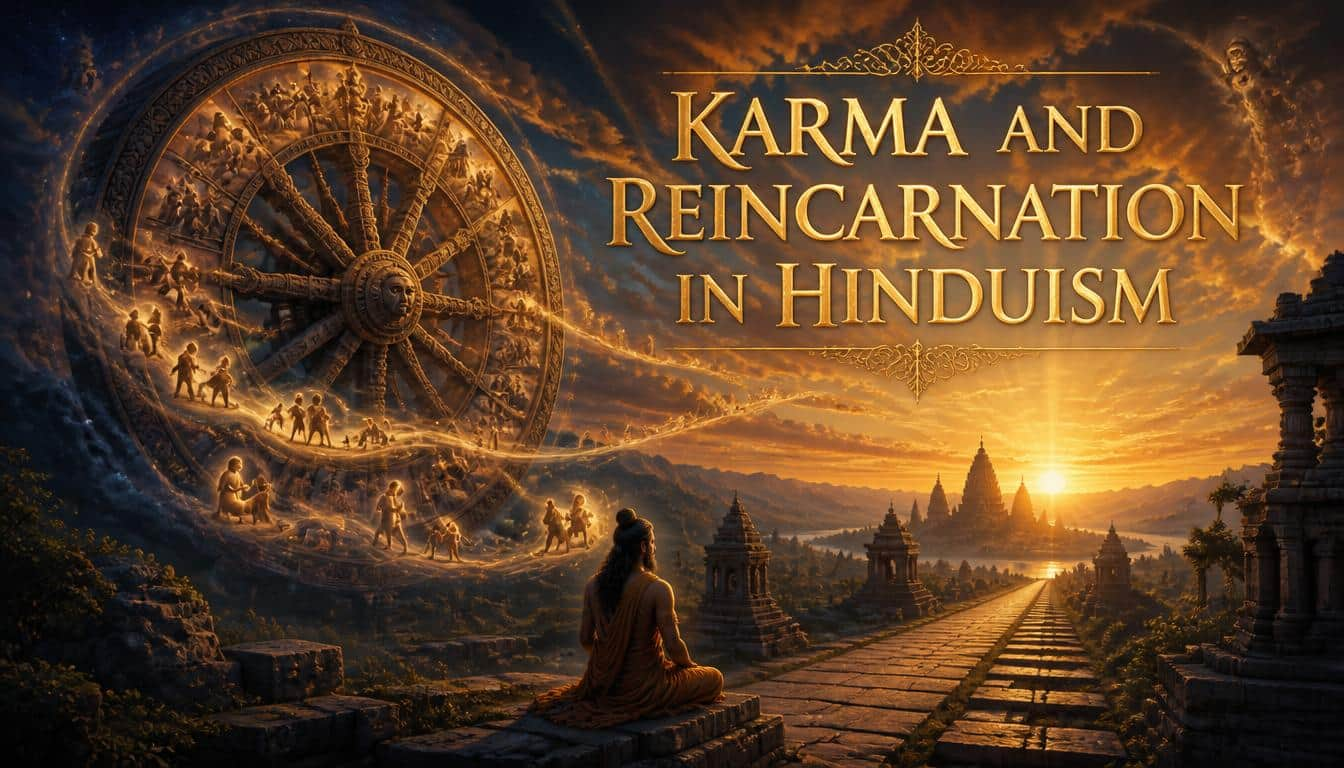
- As we are aware, the ancient Indian civilization goes back thousands of years, and the immensely rich tradition, culture, heritage, and legacy have been passed on from generation to generation since time immemorial. Not for nothing, the ancient Indian civilization is immensely revered, highly preferred, gloriously spoken of, blindly followed, and perpetually adopted in the face of the vagaries of life for millennia. Of course, India has always been a hub of spiritual evolution, from time to time gifting the world with some of the most precious philosophical scriptures that have not only stood the test of time but are also so perpetually relevant. They never run out of heft, despite humankind progressing unbelievably in the last few decades is unquestionable.
 PC: World Eschatology
- People familiar with the evolution of Indian civilization over the centuries would note that, despite encountering several challenges vis-à-vis conquests, invasions, attacks, usurpers, connivingly ambitious satraps, ambivalent domestic kings looking out for expansion, and amiable local leaders willing to carry out the bidding of outsiders, have dotted our history books. Innumerable instances show how this great nation, expanding its reach across man-made boundaries once, has been exploited by leaders of all hues and colours. These monumental historical facts have been recorded in detail for centuries. Most amazingly, the remnants of such rich heritage and legacy have not only outlived generations but continue to stay relevant in the present times as well.

PC: Hindu Mirror – Hindu Devotional and Spiritual Portal
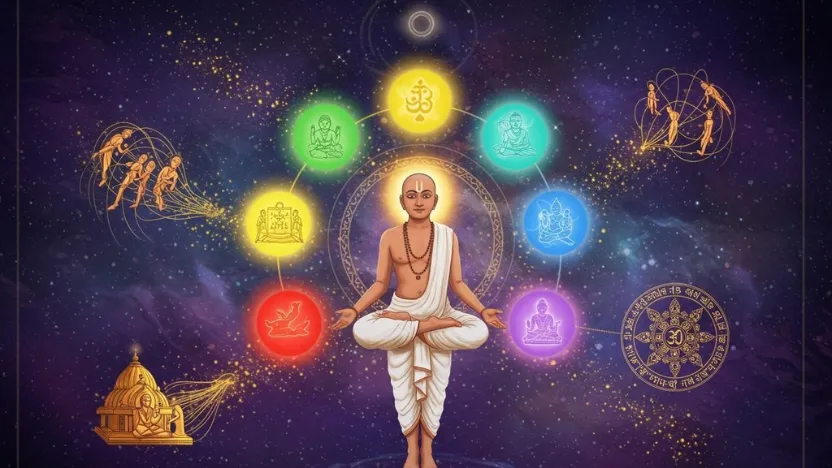
- Notably, the world has come to admire Indian spiritual and philosophical legacy for being rooted in an inner-world inquiry aimed at realizing ultimate truth, liberation, and harmony through direct experiences. For the uninitiated, the core foundations and texts of Indian civilization and spiritual thought are derived from the Vedas. The Vedas serve as the oldest oral and written repositories of cosmic order, ritual, and early metaphysical thought. The Upanishads are nothing but the Vedas, where the shift is focused from external sacrifice to the inner realization of the identity between the individual soul and ultimate reality. Most Indian philosophies converge on core concepts like Karma (causality), samsara (cyclic rebirth), and mukti (liberation). Let’s delve further into this.
PC: Astro Ulagam
- Of the various schools of thought, without getting into detail, what should readily catch one’s attention is the concept surrounding Karma, or the causality factor. No less than a towering spiritual figure like Swami Vivekananda passionately propagated the irrefutable fact about Karma in no uncertain terms. Good-good, bad-bad, none escape Karma, he said. Where there is form, we are chained by Karma. In simple layman’s language, whatever action we initiate, the cause and effect will prevail. The basic premise is to be extremely mindful of doing the right things, since the universal truth inherent in the cause-and-effect phenomenon will always reign. Clean thinking, a cleaner heart, and harmless deeds will always result in corresponding action. That’s the truth.



